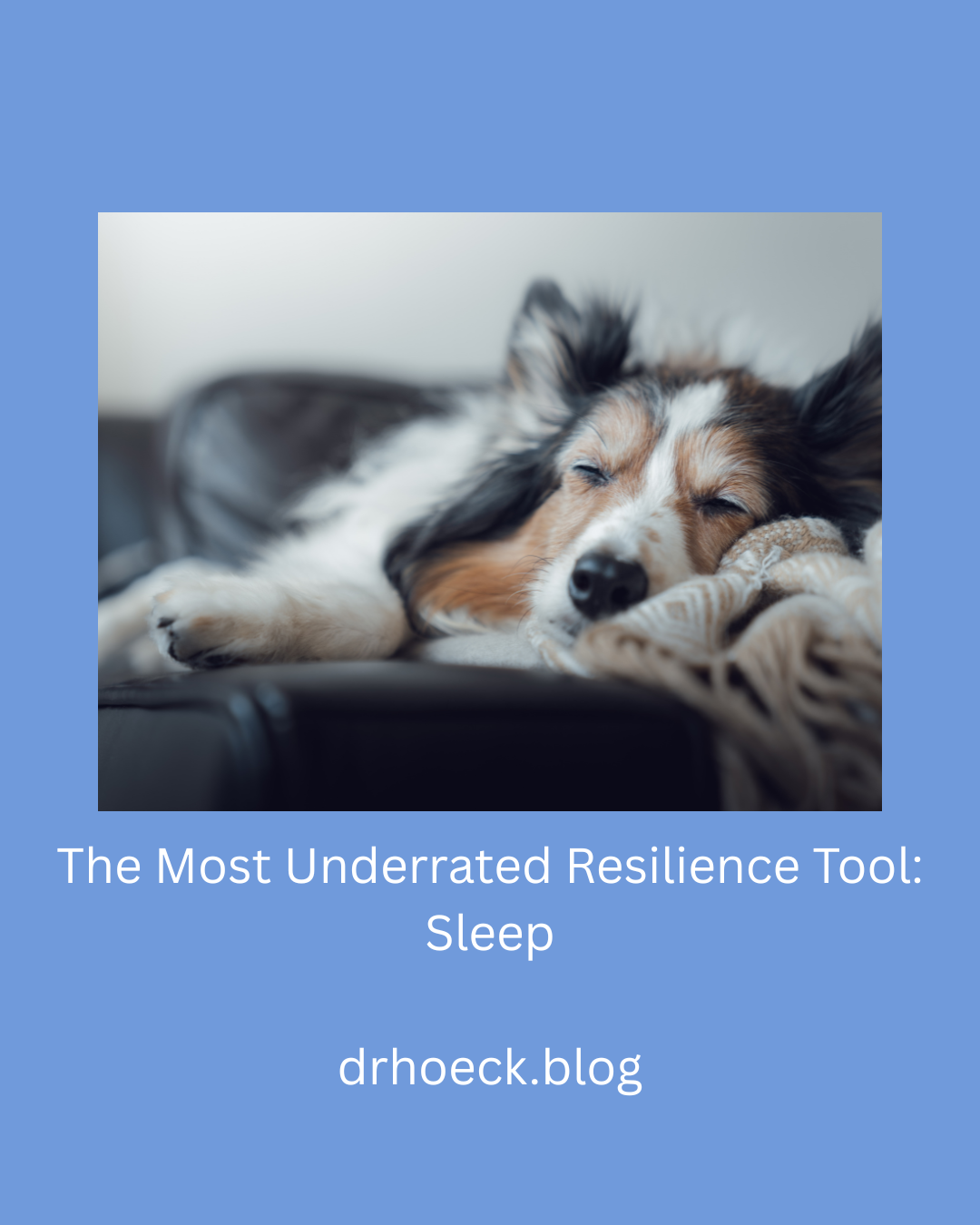
Why sleep may be the missing link behind your fatigue, aches, brain fog, weight gain, and declining resilience.
For years, I thought sleep was important.
Now, I think it’s essential.
As I’ve been helping my mother prepare for a major move, managing real estate timelines, navigating unexpected stressors, and balancing the demands of life and business, I’ve become even more protective of my sleep.
Not because I want to.
Because I’ve learned I can’t afford not to.
When life becomes more demanding, many of us try to push through.
We stay up later.
Wake up earlier.
Drink more coffee.
Power through fatigue.
But resilience doesn’t work that way.
In fact, sleep may be one of the most important factors determining how well your body adapts to stress.
Sleep Is Where Resilience Is Built
Most people think of sleep as rest.
Your body sees it differently.
Sleep is when your body performs some of its most important repair work:
- Tissues recover.
- Hormones are regulated.
- The brain clears metabolic waste.
- Memories are consolidated.
- The nervous system resets.
- Immune function is restored.
Without adequate sleep, the body loses some of its ability to adapt, recover, and respond to challenges.
In other words, resilience begins to decline.
The Symptoms Often Don’t Look Like a Sleep Problem
Many people expect poor sleep to cause fatigue.
But sleep deprivation often shows up in less obvious ways:
- Everything hurts more than it used to.
- Recovery takes longer.
- Motivation drops.
- Cravings increase.
- Brain fog becomes more common.
- Stress feels harder to manage.
- Exercise becomes more difficult.
- Inflammation increases.
- Pelvic floor symptoms may become more noticeable.
- Small problems feel bigger than they should.
These symptoms can appear gradually, making it easy to miss the connection.
Stress and Sleep: The Jenga Connection
Recently, I wrote about resilience using the analogy of a giant Jenga tower.
Life removes blocks.
Stress.
Loss.
Travel.
Health challenges.
Major transitions.
Poor sleep is often one of the first blocks removed.
The problem is that sleep isn’t just another block.
It’s one of the foundational blocks holding up the entire tower.
When sleep suffers, the body’s ability to tolerate other stressors begins to suffer too.
The Goal Isn’t Perfect Sleep
Many people become frustrated because they believe they need perfect sleep to be healthy.
You don’t.
The goal is to create enough opportunities for recovery that your body can continue adapting to life’s demands.
That might mean:
- Protecting a consistent bedtime.
- Limiting evening screen exposure.
- Getting morning sunlight.
- Reducing alcohol intake.
- Managing caffeine timing.
- Moving your body regularly.
- Creating space for recovery during stressful seasons.
Small improvements can create meaningful changes.
What Is Your Body Trying to Tell You?
One of the themes I often discuss with patients and clients is this:
Symptoms are the message. Resilience is the answer.
If you’re feeling more tired, more achy, less motivated, or less able to handle stress than you once were, your body may not simply be “getting older.”
It may be asking for more recovery.
Sleep is one of the most powerful ways we can answer that request.
Healthy aging isn’t about pushing harder.
It’s about recovering better.
And sleep may be one of the best investments you can make in your future resilience.
Ready to Explore What Your Symptoms Are Telling You?
Healthy aging isn’t about doing more.
It’s about recovering better.
If you’re struggling with fatigue, pain, poor sleep, or feeling like your body no longer bounces back the way it once did, it may be time to look beyond the symptoms and explore the systems that support resilience.
Symptoms are the message. Resilience is the answer.
If you’d like to learn more about restoring your body’s capacity to adapt, recover, and thrive, schedule a complimentary Discovery Call. Together, we’ll explore what your symptoms may be telling you and identify practical strategies to help you age well.
~Dr. Rebecca
Leave a Reply